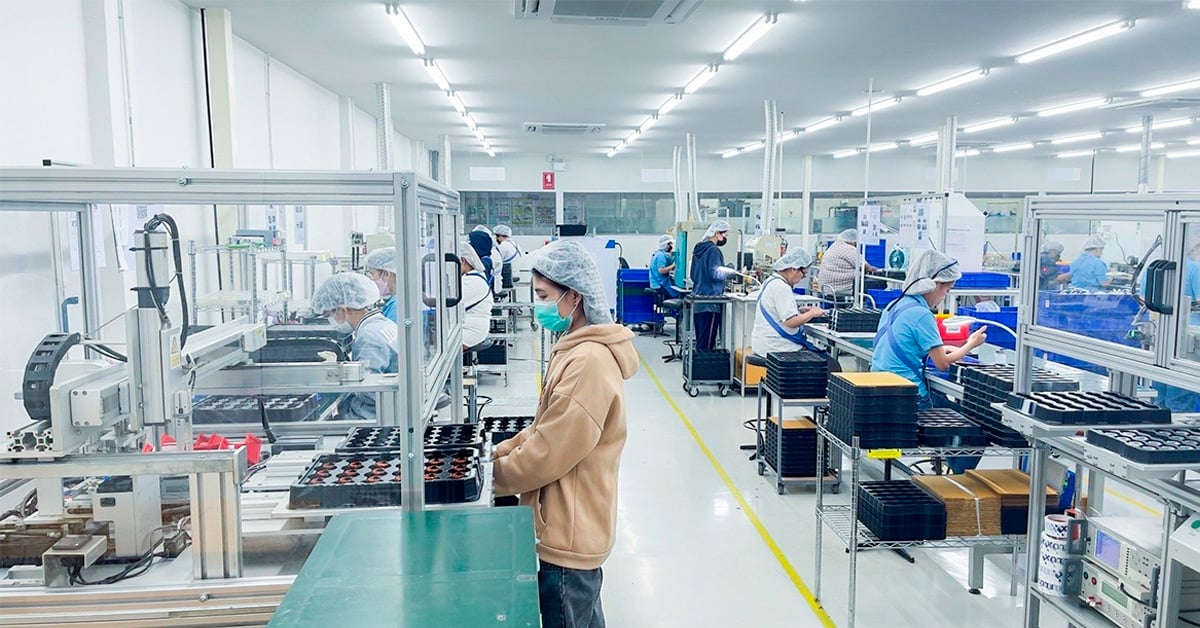
With intensified global competition, manufacturers are increasingly turning to automation to maintain competitiveness, improve consistency, and scale production efficiently. At Flux, we are no exception. Recently, we touched upon the expansion of our manufacturing facilities in Thailand, and part of this ramp-up includes automation projects. We are delighted to share the latest news with you.
The answer to several questions
Automation is key in modern manufacturing, enabling seamless scalability while maintaining uncompromising consistency and reliability. Reduced manual handling minimises potential sources of error and ensures a uniform quality across production runs – every time.
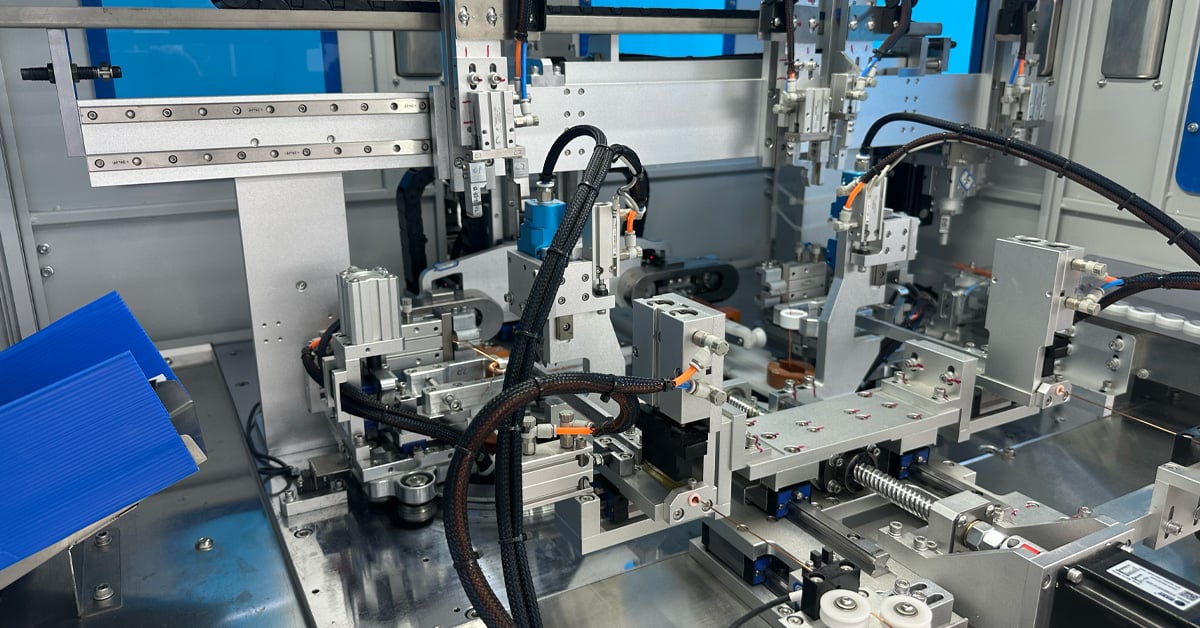
At our facilities in Bangkok, Thailand, we have several automation projects – some already in place, others in the pipeline. The newest addition is our fully automated coil winding machine, designed to increase production capacity while ensuring quality across every unit produced.
Along with several other projects, this represents a significant investment, but we consider this investment a strategic necessity to strengthen production capabilities, improve efficiency, and support future growth.
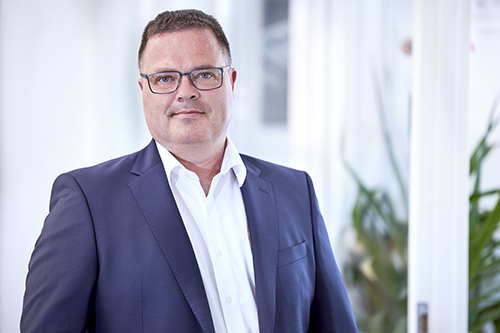
"Automation is not only about efficiency, but about positioning ourselves for the future. By continuously investing in automation for our site in Thailand, we are strengthening our ability to scale production, ensure consistent quality, and support our customers in increasingly demanding markets,” John Willum, COO for Industrial and eMobility.
The intertwined benefits
The benefits of automation are connected and intertwined. What this upgrade ultimately means for manufacturing is increased capacity, greater consistency, and reduced manual handling. By automating steps in the winding process, production can run more efficiently and with greater stability, making it easier to scale output in line with the demands.
Simultaneously, automation improves consistency. Reduced manual intervention lowers the risk of human error and ensures uniform quality across production runs. This results in components that meet the same specifications every time, supporting both reliability and predictability in the manufacturing process.
In addition, reduced manual handling enables a more stable and efficient working environment, as automation minimises repetitive tasks and allows operators to focus on monitoring and quality assessment rather than manual production steps. The result is a more streamlined production setup that supports both efficiency and long-term scalability.
All these aspects are firmly aligned with the overall vision for our site in Thailand. The investment in automation on our Asian manufacturing site reflects a broader commitment to strengthening the local production capabilities.
Eyes on the price
While automation involves significant investments in the short term, it supports our competitiveness in the long run, as it contributes to stable production costs and improved efficiency. With this strategic investment in place, we are even better prepared to support customers with reliable delivery and consistent quality, even as demand increases.
As we continue towards an even more efficient, scalable, and competitive production setup, we remain focused on supporting both current demand and future growth.
Contact John Willum, our COO for Industrial and eMobility, to learn how our automation facilities can improve your upcoming project.
 FLUX News Desk

 FLUX News Desk : Dec 5, 2024, 4:10:35 PM