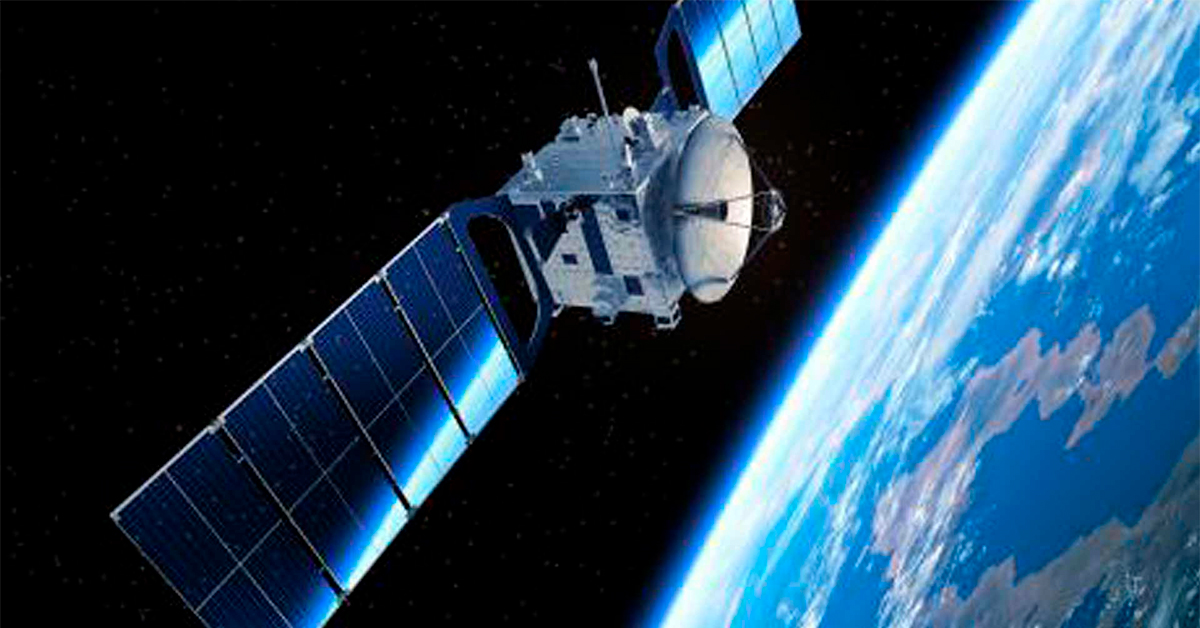
Space is no longer restricted to huge national or continental agencies. Commercial enterprises are starting to occupy the lower orbit, changing the market for the internet and communication. At Flux, we are well prepared for the new scenery – and we are planning for the long run.
New Space, new markets
Commercial Space, or New Space, is a relatively new market within the space industry. Operating in Low Earth Orbit (LEO), Commercial Space differs from traditional Deep Space for two key reasons: the number of satellites is significantly higher, and the lifespan of the missions is substantially shorter.
However, in the words of our COO of Defence and Space, Lars Gregersen, space is space, and the standards set for potential suppliers are as rigid as ever. Fortunately, we have an ace up our sleeve, and we are delighted to share it with you.
Destination: Thailand
To meet the requirements for the new market, we have developed a highly suitable concept. We call it HiRel – High Reliability. Our HiRel concept is not a downgrade – it is a production strategy that combines a true Space design and reliability with more flexible industrial scaling.
In our production facilities in Thailand, we have dedicated a department to the production of space components, adhering to meticulous standards for design, safety margins, and materials. Gregersen explains: “Our Space designers create the products utilizing proven materials from our DML and prepare the documentation, just as if the components were to be used in a Deep Space Mission. However, the dedicated production line is certified to military standards."
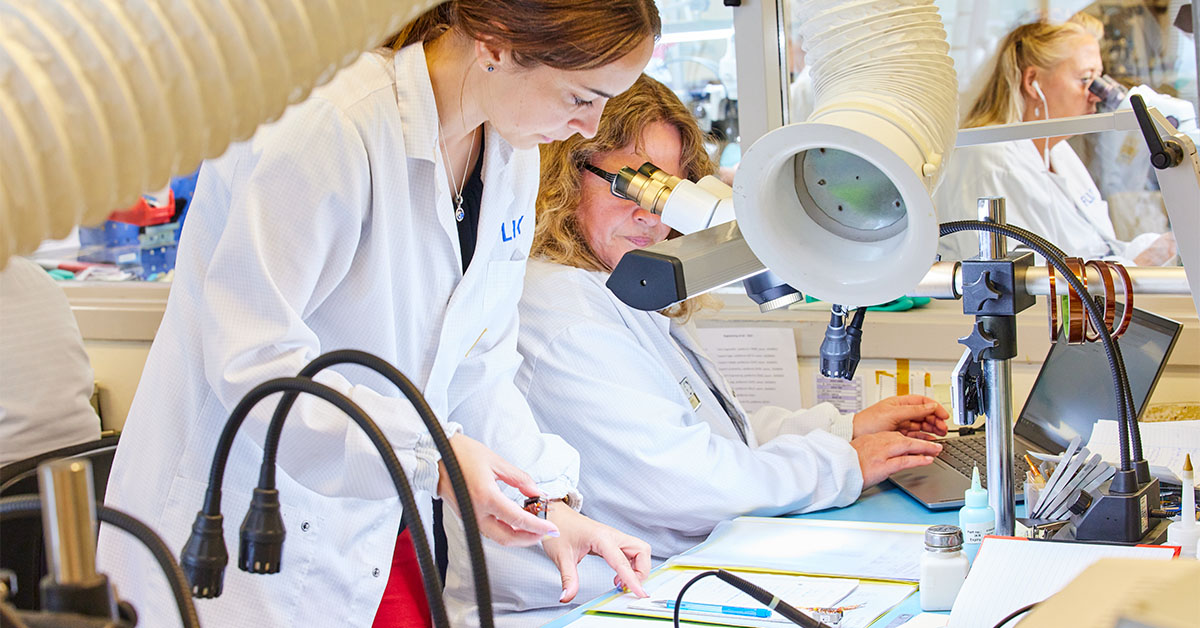
The operators are certified according to the IPC standards (IPC-A610 CLASS 3), just like in our facilities in Denmark, and the same regulations apply with regard to traceability.
Gregersen explains: “In short, whenever we make a design, it complies with all existing standards, be it NASA or ESA. Our customers are free to choose if they wish to use the components for Deep Space or Commercial Space. The design and the materials remain the same.”
When the HiRel components are produced and approved in Thailand, we offer to send them to our Space facility in Denmark for the final tests. Gregersen: “We offer a full-on Space Screening procedure for all HiRel-components – and you wouldn’t do that unless you’re 100% sure of the quality of every single component.”
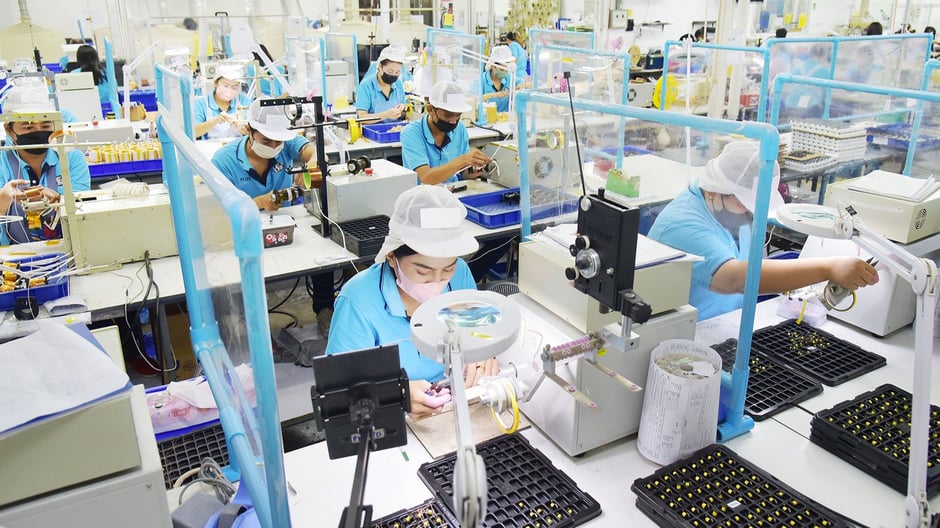
A view from our facilities in Bangkok, Thailand
A matter of price and quantity
If our customers are heading into space, we guarantee that the components comply with the standards. However, we can produce the components at a more competitive price if the project is financially restricted, or if the components are to be used in large constellations. Quantity is key to a lower price.
Gregersen elaborates: ”There are two main considerations: price and quantity. We can produce the components in our HiRel department in Denmark – a relatively small facility of limited capacity, where we typically produce components in quantities of a few hundred. But if customers are in the market for larger quantities, Thailand may be the better option.”
When producing inductors or transformers for missions heading into Deep Space, we are usually dealing with quantities ranging from 1 up to 100 – and if we are approaching 100, “it’s a big mission,” Gregersen explains. He continues: “In Commercial Space, we’re dealing with many hundreds if not thousands of components, and there is usually a demand for an even lower price. That’s where our facilities in Thailand come into play.”
Just the beginning
Whether we are talking Deep Space or Commercial Space, heritage is everything. And though it is still early days for Commercial Space, our production lines have already proved their worth: “We have delivered components for missions like Iridium Next, Eutelsat’s OneWeb, and Telesat Lightspeed – that latter is still under production – as well as supplying a large number of CubeSat manufacturers,” Gregersen proudly declares.
However, it is just the beginning of our adventures in Low Orbit: “Maybe we have big news to reveal in the months to come. You never know,” Gregersen teases with a sly grin, “but you better stay tuned.”
Contact John Willum, our COO, to explore how Flux can help you develop and innovate your next project and contribute to space exploration.
 FLUX News Desk

 FLUX News Desk : Nov 22, 2023, 2:27:04 PM